pdaddyII said:
Hell yes, that's exactly the type of dog I'm looking for. Do/have you ever owned one? Would you compare their temperament with that of a lab?
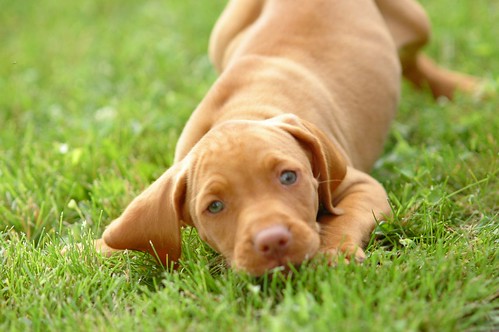
Both my brother and father have em. Great dogs! They almost went extinct during WWII. Russians would purposely kill them knowing that they were the Hungarians dog of royalty. A good bloodline will cost, but thats the same with any good breed of dog. Some general info below:
Vizslas are very high energy, gentle-mannered, loyal, caring, and highly affectionate. They quickly form close bonds with their owners, including children. Often they are referred to as "velcro" dogs because of their loyalty and affection. They are quiet dogs, only barking if necessary or provoked.
They are natural hunters with an excellent ability to take training [1]. Not only are they great pointers, but they are excellent retrievers as well. They will retrieve on land and in the water, making the most of their natural instincts. However, they must be trained gently and without harsh commands or strong physical correction, as they have sensitive temperaments and can be easily damaged if trained too harshly (Gottlieb, 1992). Vizslas are excellent swimmers and often swim in pools if one is available. Like all gun dogs, Vizslas require a good deal of exercise to remain healthy and happy.
The Vizsla thrives on attention, exercise, and interaction. It is highly intelligent, and enjoys being challenged and stimulated, both mentally and physically. Vizslas that do not get enough attention and exercise can easily become destructive or hyperactive. Under-stimulated Vizslas may also become depressed or engage in obsessive-compulsive behaviours such as persistent licking (Coffman 1992). Vizslas are very gentle dogs that are great around children.
The Vizsla is totally unsuited to being kept outside, since unlike most other breeds, it does not have an undercoat. This lack of undercoat makes the Vizsla susceptible to the cold so it must not be kept in a kennel or left outside for extended periods of time. The Vizsla wants to be close to its owner as much of the time as possible. Many Vizslas will sleep in bed with their owners if allowed, burrowing under the covers. They are self-cleaning dogs and only need to be bathed five or six times a year, and are somewhat unique in that they have little noticeable "dog smell" detectable by humans. After several forays into lakes and streams they will develop an aroma that is a weaker version of the 'wet dog' smell. A quick bath and this odor will vanish. Lack of undercoat also means Vizslas are less likely to cause allergic reactions than many breeds.


 Please Scroll Down to See Forums Below




















 :
: 


