Please Scroll Down to See Forums Below
napsgear
genezapharmateuticals
domestic-supply
puritysourcelabs
UGL OZ
UGFREAK
napsgeargenezapharmateuticals domestic-supplypuritysourcelabsUGL OZUGFREAK

In Defense of Rorke's Drift

  • Thread starter Thread starter Spartacus
  • Start date Start date
S

Spartacus

Guest
today is great defense rememberance day
K for contributions
overall K for the best

 
mjoh91.jpg
 
Michael Murphy and three fellow SEALs were searching for a terrorist in the Afghan mountains on June 28, 2005, when their mission was compromised after they were spotted by locals, who presumably reported their presence and location to the Taliban.

A fierce firefight ensued, with more than 50 anti-coalition militia firing on the outnumbered SEALs.

Despite the intensity of the firefight, Murphy _ already wounded _ is credited with risking his own life to save the lives of his comrades by moving into the open for a better position to transmit a call for help.

While still under fire, Murphy provided his unit’s location and the size of the enemy force. At one point he was shot in the back, causing him to drop the transmitter. Murphy picked it back up, completed the call and continued firing at the enemy who was closing in.

Murphy then returned to his cover position with his men and continued the battle.

By the end of the two-hour gunfight, Murphy and two of his comrades were dead. An estimated 35 Taliban were also killed. The fourth member of their team managed to escape and was protected by local villagers for several days before he was rescued.

“His sacrifice reminds us of the dangers the men and women of our armed forces face in order to defend our nation,” said Rep. Timothy Bishop, a Democrat who represents eastern Long Island. “I can think of no one more deserving of this medal today. It can never make up for his loss, but it extends the honor which he and his family so well deserve.”

A 1994 graduate of Patchogue-Medford High School, Murphy attended Penn State University, where he graduated with honors with bachelor’s degrees in both political science and psychology. He was accepted to several law schools but instead accepted an appointment to the Navy’s Officer Candidate School in September 2000.
 
Spartacus said:
139 British troops against about 4,500 Zulus.

Uniforms, arms and equipment:
The Zulu warriors were formed in regiments by age, their standard equipment the shield and the stabbing spear. The formation for the attack, described as the “horns of the beast”, was said to have been devised by Shaka, the Zulu King who established Zulu hegemony in Southern Africa. The main body of the army delivered a frontal assault, called the “loins”, while the “horns” spread out behind each of the enemy’s flanks and delivered the secondary and often fatal attack in the enemy’s rear. Cetshwayo, the Zulu King, fearing British aggression took pains to purchase firearms wherever they could be bought. By the outbreak of war the Zulus had tens of thousands of muskets and rifles, but of a poor standard, and the Zulus were ill-trained in their use. The Zulus captured some 1,000 Martini Henry breech loading rifles and a large amount of ammunition. Some of these rifles were used at Rorke’s Drift. All the British casualties, few though they were, were shot rather than stabbed.

Winner: The British.
 
Rorke’s Drift is an iconic battle for Britain like Isandlwana, but for the reverse reason. After the disastrous and apparently inexplicable slaughter of the 1st Battalion, the 24th Foot, Bromhead’s B Company, 2nd Battalion of the same regiment with their colleagues restored the prestige of British arms by their successful defence of the mission station.

Just as it was incomprehensible to the public in Britain that 1,000 British infantry armed with modern breach loading rifles could be overwhelmed by native troops armed principally with stabbing spears, it was astounding that a handful of the same troops could withstand the overwhelming attack delivered against the mission station later the same day.


Rorke's Drift: defending the biscuit box wall

On 11th January 1879, Lord Chelmsford led the Centre Column of his invading army into Zululand, crossing the Tugela River at Rorke’s Drift. On 22nd January 1879, the Zulu Army sidestepped Chelmsford’s advancing force and wiped out the troops he had left at his advanced camp by the hill of Isandlwana, principally the 1st Battalion, 24th Foot under Colonel Pulleine.

Cetshwayo, the Zulu King, when he dispatched his army to fight Chelmsford’s invading columns, issued orders that his warriors were not to enter the British colony of Natal. He still hoped to negotiate a peaceful settlement of the war and did not wish to be labeled an aggressor.


Dabulamanzi: the Zulu general who led the attack on the British at Rorke's Drift

As the battle at Isandlwana drew to a close several Zulu regiments under Cetshwayo’s younger brother, Prince Dabulamanzi kaMapande, reached the Tugela River, cutting off the few escaping British. These regiments had not been involved in the battle and looked for a way to join in the success. Dabulamanzi, an aggressive leader, resolved to lead these Zulu regiments to the further triumph of capturing the British base at the Rorke’s Drift crossing on the Tugela.
A single company of infantry garrisoned the mission station at Rorke’s Drift, B Company, 2nd Battalion, 24th Foot. Although the 24th was designated the South Warwickshire Regiment, this company was manned largely by Welshmen. The company colour sergeant was Frank Bourne; the sole officer, Lieutenant Gonville Bromhead.

The mission belonged to the Reverend Otto Witt, a Swede. Mr Witt’s church had been turned into a store by the British Army; his house a military hospital under Surgeon James Reynolds.
Lieutenant John Chard, Royal Engineers, arrived at Rorke’s Drift on 19th January 1879 with a party of sappers. Chard had cause to journey up to Isandlwana immediately before the battle and on his return saw groups of Zulus.

On 21st January 1879 the garrison heard firing from the distant battle and a group of officers climbed the nearby hill. They saw what they eventually realised to be parties of Zulus advancing towards the mission station. News of the disaster at Isandlwana was confirmed by the arrival of Lieutenant Ardendorff from the camp.
 
http://www.amazon.com/Zulu-Michael-...6-5814835?ie=UTF8&s=dvd&qid=1193078713&sr=8-2

"Sentries have come in from the hill, sir.... They report Zulus to the southeast. Thousands of them." One of the best pure action movies ever made, this rousing adventure recounts the true story of a small 18th-century regiment of British troops (including a very blue-blooded turn by a young Michael Caine) endlessly besieged by an seemingly unceasing number of fierce attackers. Although the basic premise has since been executed with more technical skill and panache (most notably by Aliens and Michael Mann's The Last of the Mohicans), it's unlikely that anything will ever top the utter spectacle and, above all, sheer unbelievable size of the combat scenes that almost wholly comprise the last half of this film. A gloriously exhilarating essential for anyone looking to get lost in the heat of cinematic battle, topped off with a healthy dose of gallows humor. Not to be missed. Richard Burton voiced the stirring narration. Zulu was followed by a slightly dry but still recommended prequel, Zulu Dawn. --Andrew Wright
 
he Hurricanes were primed to implode in a bizarre display of rebelliousness that still lingers, two decades later. Both teams attended a steak fry, where they were supposed to deliver a brief skit. Penn State's players wore suits and ties. Miami's players wore their black sweat suits, only because, Highsmith insists, the Fiesta Bowl officials told them to. The Penn State punter, John Bruno, made a couple of jokes, dragged out a garbage can labeled with masking tape as Jimmy Johnson's Hair Spray, and made a crack about how much racial harmony there was at Penn State: "We're one big family," he said. "We even let the black guys eat with us at the training table once a week."

So now it was Miami's turn. Jerome Brown stood up and unzipped his sweat suit to reveal his fatigues. "Did the Japanese sit down and eat with Pearl Harbor before they bombed them?" he said. "No. We're outta here."

Out toward their buses went the men in the fatigues, cementing a reputation that Miami still cannot shake, 14 years after Brown's death in a car accident. Bauer started to laugh. Bruno stood up, made some crack about Miami having to leave so the players could begin filming "Rambo III," and then delivered a quote that Penn State football fans still evoke, 14 years after Bruno's death from melanoma:


"Excuse me," he said. "But didn't the Japanese lose the war?"
 
The first responding fire fighters were from the plant fire brigade. The tar roof of the nearby turbine hall, which served all the reactors, was on fire. Lubricants inside the turbine hall were ignited.

Fire fighters quickly climbed to the roof and worked at extinguishing the fires, while their commander sounded a general alarm that would bring fire apparatus and fire fighters from all over the Kiev region. Fifty units responded to the fire and were successful in extinguishing all but the fire in the reactor.

Apparently, the fire fighters did not understand the radiation hazard present. They did not have appropriate protective clothing. One by one they began to experience pressure in the chest, severe coughing, nausea, vomiting, and fainting. At first they thought it was from the smoke and heat of the fire.

They were unaware that they had been walking on radioactive material that was emitting 20,000 roentgens per hour. Doctors found the fire fighters extremely agitated and nervous- suffering from "nuclear frenzy of the nervous system." They had extinguished the fires, but they were burned, many fatally, by the invisible flame of gamma and neutron radiation.
 
The operators worked to keep the fire in the turbine hall from spreading to the other reactors, which would have had "scarcely imaginable consequences." Nitrogen was used to purge the hydrogen. Oil was transferred from the turbine hall oil tanks and the tanks flushed with water. Eventually the other reactors were shut down.

But the fire in Reactor 4 continued to defy all attempts at extinguishment. Military helicopters were brought in to fly over the reactor and drop sand on it. Working to the point of exhaustion and being zapped by radiation on every overflight, the pilots flew up to 300 sorties a day, dropping some 5000 Tons of friable material on the reactor. Still the fire burned.

Valves might be opened to drain the water, but this could only be done by divers. Soviet soldiers were offered special inducements to undertake the deadly dive into the radioactive water. If they succeeded in opening the valves their families would be given cars, dachas, apartments, and special benefits. A number volunteered. Miners were put to work tunnelling underneath the compartments. Cement workers poured cement on the radioactive debris.
 
Spartacus said:
A number volunteered. Miners were put to work tunnelling underneath the compartments. Cement workers poured cement on the radioactive debris.
2m5ectc.jpg
 
sparta was rorkes drift the same as the dutch boers who formed the wagon laager and defeated the zulus? i read about that, the zulus struck first, wiped out the wimminez...then when they came back a small force of boers hiding behind their wagon circles defeated the whole army.
never bring a spear to a gun fight
 
Gambino_Von_Moltke said:
sparta was rorkes drift the same as the dutch boers who formed the wagon laager and defeated the zulus? i read about that, the zulus struck first, wiped out the wimminez...then when they came back a small force of boers hiding behind their wagon circles defeated the whole army.
never bring a spear to a gun fight
do the research and post it up
it's a good read
then collect the K award
 
Mr. dB said:
Is that the same Michael Murphy who sang "Wildfire"?
maybe half a dozen on this board are even aware a congressional medal of honor was awarded today
as a matter of reference
there's been more presidents than medal of honor's
I think
 
Spartacus said:
Murphy was killed June 28, 2005, while leading three other Navy SEALs on a harrowing mission behind enemy lines on the Afghanistan-Pakistan border in search of a Taliban leader.

According to an account provided by the Navy, the four had been discovered shortly after being inserted on a mountainside near the border, when a goat herder stumbled across their position.

After debating among themselves whether to kill him to assure they would not be detected, they decided to let the shepherd go unharmed. But within hours the four were surrounded by scores of heavily-armed men.

Under intense gunfire, the four SEALs fled down the steep mountainside -- making jumps of more than 20 feet. But they were unable to shake their pursuers. Their ammunition was running low. They were wounded and bleeding.

With his men cornered in a deep ravine and suffering from severe wounds, Murphy realized his only chance for getting help would be to leave the protection of their rocky hiding place and to get to an open spot where he could radio for help. So Murphy darted into the open to make the call, exposing himself to additional fire.

Hit at least once in the back while he was sending an SOS, he picked up the transmitter he had dropped, completed the call, and then returned to his position to resume the fight, according to accounts.

Murphy perished in the firefight along with two other SEALs: Sonar Technician 2nd Class Matthew Axelson, of Cupertino, Calif., and Gunner's Mate 2nd Class Danny Dietz, of Littleton, Co. Murphy is buried at Long Island's Calverton National Cemetery.

A third SEAL, Hospital Corpsman 2nd Class Marcus Luttrell, escaped with injuries after being blown off of a ridge and being secreted by another Afghan shepherd. Luttrell attended Monday's White House ceremony.

The incident also claimed the lives of eight other Navy SEALs and eight Army Night Stalkers who responded to Murphy's distress call.

The deaths struck a deep chord among the closely-knit community of Navy SEALs, a 2,300-man force that is often called on to perform stealth missions behind enemy lines.

James Quattromani, a Northwestern University law student and former SEAL who roomed with Murphy when the two men were stationed in Hawaii, said Murphy's decision to sacrifice himself for his men did not surprise him.

"Guys like Murph don't die as old men," said Quattromani, who also attended the ceremony. "They die as heroes."


http://www.newsday.com/news/local/ny-usmeda1023,0,7262802.story?coll=ny-education-adrail
 
Rorke's Drift, situated 46 km southeast of Dundee, is the site of one of the most famous battles of the Anglo-Zulu War.

The best-known drift through the Buffalo River, Rorke's Drift was named after James Rorke, a ferryman who drowned in its waters and whose remains lie buried at the foot of a nearby hillside. Looking at the unspoilt, majestic beauty of the surrounding countryside today, it's hard to imagine the bloody battles that once raged in the area. A mission station was established by the Reverend Otto Witt of the Swedish Missionary Society, who built a small church, mission house and cattle kraal at the foot of a rocky mountain 1 km west of Rorke's Drift. In honour of the King of Sweden, he called it Oscarsberg.

When Lord Chelmsford, the commander-in-chief of British forces in Natal, invaded Zululand at Rorke's Drift on 11 January 1879, he encamped on the other side of the river, 16km to the east, at Isandhlwana.

Being so conveniently located close by, the Swedish mission was promptly converted into a supply depot and hospital. On 22 January, the British were attacked by the Zulu chief, Cetshwayo - and were shocked by the extent of the Zulu resistance. They lost at least 850 of their own men and 470 black allies. The Zulus lost 1 000 soldiers.

After the battle, two regiments commanded by Dabulamanzi were sent to pursue men fleeing from Isandhlwana who crossed the river at what would later become known as Fugitive's Drift. The Zulu impis had received no order to attack Rorke's Drift. Cetshwayo had apparently warned them that any attack into Natal would be futile. A force of impi swam the river, however, and were so heady with victory that they attacked the mission. Their king's warning, which they failed to heed, came terribly true.

At Rorke's Drift, a small force of just over 100 men - a mixed bag of flotsam and jetsam from the Victorian army - had been left under the command of Lt John Chard. Earlier, a column on its way to fight at Isandhlwana had left behind 300 Basuto troops to aid Lt Chard. When the Zulu attack on the mission station began, however, the Basuto and their European leader fled. Seeing the impi coming, Lt Chard prepared for battle as best he could. A make shift fortress was made out of things such as sacks of mielies and biscuit boxes. The hospital bore the brunt of the attack, with most of the patients losing their lives. The others escaped to a central courtyard. The engagement raged until the following day, when finally an armed detachment under Lt-Col Russell arrived to relieve the defenders.

It turned out that the British had lost only 17 men in what became known as the battle of the 'Heroic Hundred', while the Zulus had lost 300. Both sides showed incredible valour. Eleven Victoria Crosses were awarded, and the bravery of Lt Chard is still commemorated by the SA Army with the John Chard Medal for bravery.

The main attractions at the Rorke's Drift Battle Museum are the magnificent model and audiovisual depictions of the battles that were fought in the region. In fact, the museum has attracted worldwide attention for its outstanding displays of the Anglo-Zulu War.

The countryside around Rorke's Drift is unspoilt and tranquil. You can see the natural grandeur that so many military artists have tried to capture on canvas. This is where you can savour the true majesty of a frontier landscape.

After the war, in 1882, the Swedish missionaries re-established themselves. In the last 30 years, the fame of Rorke's Drift as a battlefield has almost been matched by the fame of an arts and crafts centre run by the Evangelical Lutheran Church. In what started as a tiny workshop in 1962, black artists were initially trained by Swedish art teachers. Those who received their start here, include Azaria Mbatha, lino-cut artist John Muafangejo and sculptor Zuminkosi Zulu. Many students of the centre from around the country have later won national and international acclaim, with their work being exhibited in galleries in Europe and North and South America. Many tapestries have been commissioned by well-known institutions, and hang in churches, offices and homes around the world.
 
VCFieldingGif.gif


John Fielding who was awarded the Victoria Cross after the battle at Rorke's drift in 1879. is associated with Cwmbran, but he was actually born in Merthyr Road, Abergavenny, on May 24, 1857, the second son of Irishman Michael and Margaret Fielding (nee Godsil).
When John was five, his father, in search of work as a labourer moved the family to Cwmbran. John left school at the age of nine and started work at a nut and bolt works. He joined the army - enlisting at Monmouth in May 22, 1877, in the 24th Warwickshire Regiment of Foot, and it is not known why the Williams alias was used. He was posted to B Company, 2nd Battalion, 24th regiment.
The citation said that in the famous battle at Rorke's Drift against 3,000 Zulus: "Private John Williams, his close friend Private Joseph Williams and Private William Horrigan, were posted to a distant room of the hospital. In the battles, Privates Williams, Hook, Robert Jones and W Jones, were the last four to leave. Private John Williams hacked out a hole in a wall and manage to move two patients to temporary safety.
This other room was being defended by Private Alfred H Hook, the hospital chef. Private Williams managed to block off one hole. It was only due to the quick thinking of Private John Williams and his bravery, assisted by the courage of the other hospital defenders, that most of the patients were brought to safety. The British Third Column appeared. When he had finished his share of the fighting he had two rounds of ammunition left. In 1914 he became the recruiting agent for the South Wales Borderers. John Fielding House, a residential home named after him at Llantarnam, Cwmbran, was opened in 1973.
 
jonesrgif.gif


Born in Penrhos, Clytha, near Raglan, on 19 August, Private Robert Jones was serving with the Second Battalion of the 24th Regiment of Foot when he became one of the 11 soldiers to win the Victoria Cross in the battle of Rorke's Drift. Jones used his bayonet to defend a doorway into a hospital ward until it was almost filled with dead and wounded Zulus.
Despite suffering four assegai (spear) wounds and being struck by a bullet, he helped evacuate six patients through holes in the walls during a desperate retreat through the blazing building.
Following his army service Robert Jones settled in Herefordshire and worked as a farm labourer. When he was 41, he borrowed his employer's shotgun to go crow shooting and Jones was later found dead with gunshot wounds. A verdict of "suicide whilst temporarily insane" was recorded after a coroner heard evidence that Jones suffered nightmares following his hand-to-hand struggle at Rorke's Drift. Although suicides were generally excluded from burial on consecrated ground, Private Jones's VC meant that his body was allowed to be interred in Peterchurch Churchyard, Herefordshire, but the coffin was brought into the churchyard over a wall, and his headstone faces away from all other tombs to signify how he died.
In 1998 a newspaper article suggested that it was time his headstone was reversed, but this would mean overturning the coroner's verdict. His Victoria Cross was sold at auction in 1996 to a private buyer for £80,000, defeating a bid by the Royal Regiment of Wales Museum.
 
PuddleMonkey said:
jonesrgif.gif


Born in Penrhos, Clytha, near Raglan, on 19 August, Private Robert Jones was serving with the Second Battalion of the 24th Regiment of Foot when he became one of the 11 soldiers to win the Victoria Cross in the battle of Rorke's Drift. Jones used his bayonet to defend a doorway into a hospital ward until it was almost filled with dead and wounded Zulus.
Despite suffering four assegai (spear) wounds and being struck by a bullet, he helped evacuate six patients through holes in the walls during a desperate retreat through the blazing building.
Following his army service Robert Jones settled in Herefordshire and worked as a farm labourer. When he was 41, he borrowed his employer's shotgun to go crow shooting and Jones was later found dead with gunshot wounds. A verdict of "suicide whilst temporarily insane" was recorded after a coroner heard evidence that Jones suffered nightmares following his hand-to-hand struggle at Rorke's Drift. Although suicides were generally excluded from burial on consecrated ground, Private Jones's VC meant that his body was allowed to be interred in Peterchurch Churchyard, Herefordshire, but the coffin was brought into the churchyard over a wall, and his headstone faces away from all other tombs to signify how he died.
In 1998 a newspaper article suggested that it was time his headstone was reversed, but this would mean overturning the coroner's verdict. His Victoria Cross was sold at auction in 1996 to a private buyer for £80,000, defeating a bid by the Royal Regiment of Wales Museum.
that's sad
 
Spartacus said:
Murphy was killed June 28, 2005, while leading three other Navy SEALs on a harrowing mission behind enemy lines on the Afghanistan-Pakistan border in search of a Taliban leader.

According to an account provided by the Navy, the four had been discovered shortly after being inserted on a mountainside near the border, when a goat herder stumbled across their position.

After debating among themselves whether to kill him to assure they would not be detected, they decided to let the shepherd go unharmed. But within hours the four were surrounded by scores of heavily-armed men.

Under intense gunfire, the four SEALs fled down the steep mountainside -- making jumps of more than 20 feet. But they were unable to shake their pursuers. Their ammunition was running low. They were wounded and bleeding.

With his men cornered in a deep ravine and suffering from severe wounds, Murphy realized his only chance for getting help would be to leave the protection of their rocky hiding place and to get to an open spot where he could radio for help. So Murphy darted into the open to make the call, exposing himself to additional fire.

Hit at least once in the back while he was sending an SOS, he picked up the transmitter he had dropped, completed the call, and then returned to his position to resume the fight, according to accounts.

Murphy perished in the firefight along with two other SEALs: Sonar Technician 2nd Class Matthew Axelson, of Cupertino, Calif., and Gunner's Mate 2nd Class Danny Dietz, of Littleton, Co. Murphy is buried at Long Island's Calverton National Cemetery.

A third SEAL, Hospital Corpsman 2nd Class Marcus Luttrell, escaped with injuries after being blown off of a ridge and being secreted by another Afghan shepherd. Luttrell attended Monday's White House ceremony.

The incident also claimed the lives of eight other Navy SEALs and eight Army Night Stalkers who responded to Murphy's distress call.

The deaths struck a deep chord among the closely-knit community of Navy SEALs, a 2,300-man force that is often called on to perform stealth missions behind enemy lines.

James Quattromani, a Northwestern University law student and former SEAL who roomed with Murphy when the two men were stationed in Hawaii, said Murphy's decision to sacrifice himself for his men did not surprise him.

"Guys like Murph don't die as old men," said Quattromani, who also attended the ceremony. "They die as heroes."


http://www.newsday.com/news/local/ny-usmeda1023,0,7262802.story?coll=ny-education-adrail
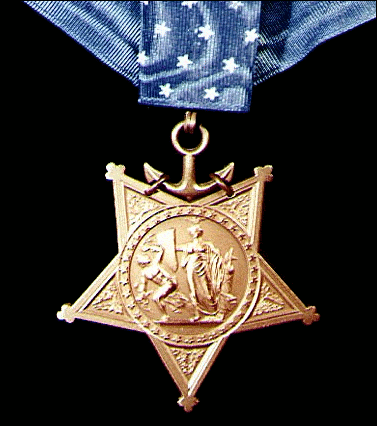

Navy__Medal_of_Honor.png
 
For some reason the NY Times thought that Murphy's commendation wasn't newsworthy.

The only survivor of the battle has this take on the media.

In an interview with former SEAL member Marcus Lutrell, author of Lone Survivor, he summed it up perfectly in his commentary of the press/media. "Rather take on 150 taliban than the media".
 
Top Bottom