

 Please Scroll Down to See Forums Below












You are using an out of date browser. It may not display this or other websites correctly.
You should upgrade or use an alternative browser.
You should upgrade or use an alternative browser.
Anyone know about Zen phliosophy?
- Thread starter cranny
- Start date


Y_lifter
New member
Zen is generally thought of as a Form of Buddhism by some.
Others say it is so different in nature that is it's own religion/Philosophy
I have studied many eastern religions and philosophy books and
IMO Watts has written about most of them and his books are good.
I'd recommend the below as a Zen intro.
http://www.amazon.com/gp/product/0375705104/104-0150084-8112733?v=glance&n=283155&v=glance
Personally I have come to understand and live by the philosophy of Taoism.(Daoism)
Watts also has written a book on this subject that you may find interesting as well
http://www.amazon.com/gp/product/03...733?v=glance&n=283155&_encoding=UTF8&v=glance
The 2 web sites I enjoy on the subject of Taoism are also below
http://www.taoism.net/enter.htm
http://www.religioustolerance.org/taoism.htm
Others say it is so different in nature that is it's own religion/Philosophy
I have studied many eastern religions and philosophy books and
IMO Watts has written about most of them and his books are good.
I'd recommend the below as a Zen intro.
http://www.amazon.com/gp/product/0375705104/104-0150084-8112733?v=glance&n=283155&v=glance
Personally I have come to understand and live by the philosophy of Taoism.(Daoism)
Watts also has written a book on this subject that you may find interesting as well
http://www.amazon.com/gp/product/03...733?v=glance&n=283155&_encoding=UTF8&v=glance
The 2 web sites I enjoy on the subject of Taoism are also below
http://www.taoism.net/enter.htm
http://www.religioustolerance.org/taoism.htm
Y_lifter
New member
B
BrothaBill
Guest
There exists a great interest in the West about Zen, particularly since World War II. Yet there seems to be a general haziness about the origin of Zen, what it believes, and the disciplines of Zen. The fault is not entirely with the interested-but-uninitiated. The fault lies also with Zen as a deliberately inscrutable teaching, made even more enigmatic by its interpreters, who spend many years writing innumerable books to explain what they insist is utterly inexplicable. Their explanations are frequently interrupted to warn the reader that, in the words of Lao Tzu, "they who tell do not know; they who know do not tell."
Many people think of Zen as a Japanese development, manifest in their Noh plays, in their flower arrangements, in their dances, in their tea ceremonies, in their art, in their archery. And if they think so, they are within the area of the truth. Some think of Zen as a Chinese interpretation of the Buddhist concept of the state of enlightenment, or of being "awakened," transported and adjusted to Japanese culture. That, too, is within the area of truth. And then there are some who think that Zen Buddhism goes back to the days of the Buddha in India, when he began to expound Zen, wordlessly.
According to legend, when Buddha was growing old he convened his disciples for an important discourse. And when they gathered and sat down silently, reverently waiting to hear their aging Master speak, the Buddha arose, came forward on the flower-decked platform, looked over his audience of disciples and monks, then bent down and picked up a flower which he raised to the level of his eyes. Then, without uttering a word, he returned to his seat. His followers looked at each other in bewilderment, not understanding the meaning of his silence. Only the venerable Mahakasyapa serenely smiled at the Master. And the Master smiled back at him and wordlessly bequeathed to him the spiritual meaning of his wordless sermon. And that, according to legend, was the moment Zen was born.
Nearly a thousand years passed from the legendary encounter of the Buddha and the venerable Mahakasyapa until Zen, transmitted from generation to generation, reached Bodhi-Dharma, who introduced it to China. And still another century passed before a Chinese philosopher and theologian, Hui-neng, who died in 713 A.D., established Zen as a sect of Buddhism.
In China, the mystic experience of the Buddha's enlightenment was influenced by the teachings of Lao Tzu. While the seed of Zen came from India, it grew in China and was transformed by Taoism. But it did not reach full flowering until it came, with Chinese Buddhism, to Japan. In Japan, Zen was crystallized into a system, although its adherents insisted that it could not be taught, and argued that there could be no dependence on explanations, on sermonizing, or on any formal creed or ritual.
Since Zen was adopted and adapted in Japan, it has gone through a number of transformations. For historical reasons, and because of its presumable nihilistic implications, Zen became popular with the intellectual classes in Japan, and its following increased to nearly five million toward the end of the Second World War.
The name "Zen" is Japanese. It derives from the Chinese Chan'an-na, which is a corruption from the Buddhist Dhyana, meaning Meditation.
Zen means waking up to the present moment. That is, perceiving this moment exactly as it is, rather than through the filter of our ideas, opinions, etc. One way to practice this is to ask yourself a Big Question, such as "What am I?" If you ask such a question strongly and sincerely, what appears is "Don't Know." This don't-know is before thinking. If you keep it moment to moment, then everything is clear. Then, each moment, whatever you're doing, just do it. When you're sitting, just sit; when you're eating, just eat; and so on. According to Zen, existence is found in the silence of the mind (no-mind), beyond the chatter of our internal dialog. Existence, from the Zen perspective is something that is only happening spontaneously, and it is not just our thoughts. All of life that we perceive is constantly in a state of change. Every atom in the universe is somewhere different every millionth of a second.
What then is existence? Zen says that it is instantaneous. Since the earth is constantly moving, and our thoughts and our bodies are constantly in a process of fluctuation, then what we really are, can only be experienced in each moment.
Think of a view. Is it what it was a second ago, or what it is now? In fact the moment we say the word “view", the view has already changed into something new.
In fact, anything that we can explain, according to this viewpoint, must be past-tense. Even if it’s about our most immediate feelings and thoughts, it is not the same experience the second after it passes through our minds. Researchers estimate that our minds perceive 12,000 separate impressions every second. This is in terms of everything that we see, hear, smell, taste, and feel.
So, what is our reality really? Isn’t it always a very limited view of what we are even actually experiencing around us? And that which we are aware of, is only our own minute impression of the world itself. Are any of our views then actually true in the absolute sense of the word, or are they all just our subjective impressions, based on an individual experience of what we are perceiving?
For example, a person may think that the Sun moves through their sky, and that the earth is stationary. Is this actually true? It may seem true for a person at the moment they make the observation, but how true is it from an absolute perspective of the universe? Can we even know what is the absolute perspective? In this example, from another perspective the earth appears to travel around the Sun.
Obviously, with this in mind, there are an infinite number of viewpoints possible at each moment, from an infinite number of perspectives; therefore there are an infinite number of existences, and in any absolute sense, existence itself is inexpressible. Can we actually experience existence then? Perhaps from the Zen perspective the question is, "Why do we not experience it?"
Zen says that if we entertain no personal version of what we think existence is, in other words, if we hold no subjective interpretation of what existence is, at the moment we are free of any notion at all, we will experience existence instantaneously, spontaneously.
Do you see this point? Zen says that we don’t really experience existence, because we are too busy experiencing our own subjective, version of existence.
How then can we experience existence itself? If we don’t create existence, then existence simply IS. The problem is, that we are usually trying to create our own model of the world. Whatever existence we create, it will be an extremely limited view, and that isn’t existence itself.
In Zen a less subjective awareness is cultivated through silent meditation, and contemplating on certain sentences, known as Koans. A koan is defined in "The Three Pillars Of Zen" as, "Formulation, in baffling language, pointing to ultimate Truth. Koans cannot be solved by recourse to a logical reasoning, but only awakening a deeper level of the mind beyond the discursive intellect."
An example of a Koan would be, “The sound of one hand clapping”, or perhaps you remember this one from grade school, “Does a tree that falls in the forest make a sound if there isn’t anyone there to hear it?," and so on.
Through these more abstract thoughts, the Zen student may find that they gradually suspend with their reasoning altogether (this is called no-mind), and this clears the way for an actual experience of existence itself.
Unanticipated, spontaneously, without warning, the student may suddenly experience that 'Peace' beyond thought, words, or description. All that anyone can really say who has experienced this is, “All is one, and one is all”. This is what Zen calls the experience of Nirvana, or Enlightenment.
Many people think of Zen as a Japanese development, manifest in their Noh plays, in their flower arrangements, in their dances, in their tea ceremonies, in their art, in their archery. And if they think so, they are within the area of the truth. Some think of Zen as a Chinese interpretation of the Buddhist concept of the state of enlightenment, or of being "awakened," transported and adjusted to Japanese culture. That, too, is within the area of truth. And then there are some who think that Zen Buddhism goes back to the days of the Buddha in India, when he began to expound Zen, wordlessly.
According to legend, when Buddha was growing old he convened his disciples for an important discourse. And when they gathered and sat down silently, reverently waiting to hear their aging Master speak, the Buddha arose, came forward on the flower-decked platform, looked over his audience of disciples and monks, then bent down and picked up a flower which he raised to the level of his eyes. Then, without uttering a word, he returned to his seat. His followers looked at each other in bewilderment, not understanding the meaning of his silence. Only the venerable Mahakasyapa serenely smiled at the Master. And the Master smiled back at him and wordlessly bequeathed to him the spiritual meaning of his wordless sermon. And that, according to legend, was the moment Zen was born.
Nearly a thousand years passed from the legendary encounter of the Buddha and the venerable Mahakasyapa until Zen, transmitted from generation to generation, reached Bodhi-Dharma, who introduced it to China. And still another century passed before a Chinese philosopher and theologian, Hui-neng, who died in 713 A.D., established Zen as a sect of Buddhism.
In China, the mystic experience of the Buddha's enlightenment was influenced by the teachings of Lao Tzu. While the seed of Zen came from India, it grew in China and was transformed by Taoism. But it did not reach full flowering until it came, with Chinese Buddhism, to Japan. In Japan, Zen was crystallized into a system, although its adherents insisted that it could not be taught, and argued that there could be no dependence on explanations, on sermonizing, or on any formal creed or ritual.
Since Zen was adopted and adapted in Japan, it has gone through a number of transformations. For historical reasons, and because of its presumable nihilistic implications, Zen became popular with the intellectual classes in Japan, and its following increased to nearly five million toward the end of the Second World War.
The name "Zen" is Japanese. It derives from the Chinese Chan'an-na, which is a corruption from the Buddhist Dhyana, meaning Meditation.
Zen means waking up to the present moment. That is, perceiving this moment exactly as it is, rather than through the filter of our ideas, opinions, etc. One way to practice this is to ask yourself a Big Question, such as "What am I?" If you ask such a question strongly and sincerely, what appears is "Don't Know." This don't-know is before thinking. If you keep it moment to moment, then everything is clear. Then, each moment, whatever you're doing, just do it. When you're sitting, just sit; when you're eating, just eat; and so on. According to Zen, existence is found in the silence of the mind (no-mind), beyond the chatter of our internal dialog. Existence, from the Zen perspective is something that is only happening spontaneously, and it is not just our thoughts. All of life that we perceive is constantly in a state of change. Every atom in the universe is somewhere different every millionth of a second.
What then is existence? Zen says that it is instantaneous. Since the earth is constantly moving, and our thoughts and our bodies are constantly in a process of fluctuation, then what we really are, can only be experienced in each moment.
Think of a view. Is it what it was a second ago, or what it is now? In fact the moment we say the word “view", the view has already changed into something new.
In fact, anything that we can explain, according to this viewpoint, must be past-tense. Even if it’s about our most immediate feelings and thoughts, it is not the same experience the second after it passes through our minds. Researchers estimate that our minds perceive 12,000 separate impressions every second. This is in terms of everything that we see, hear, smell, taste, and feel.
So, what is our reality really? Isn’t it always a very limited view of what we are even actually experiencing around us? And that which we are aware of, is only our own minute impression of the world itself. Are any of our views then actually true in the absolute sense of the word, or are they all just our subjective impressions, based on an individual experience of what we are perceiving?
For example, a person may think that the Sun moves through their sky, and that the earth is stationary. Is this actually true? It may seem true for a person at the moment they make the observation, but how true is it from an absolute perspective of the universe? Can we even know what is the absolute perspective? In this example, from another perspective the earth appears to travel around the Sun.
Obviously, with this in mind, there are an infinite number of viewpoints possible at each moment, from an infinite number of perspectives; therefore there are an infinite number of existences, and in any absolute sense, existence itself is inexpressible. Can we actually experience existence then? Perhaps from the Zen perspective the question is, "Why do we not experience it?"
Zen says that if we entertain no personal version of what we think existence is, in other words, if we hold no subjective interpretation of what existence is, at the moment we are free of any notion at all, we will experience existence instantaneously, spontaneously.
Do you see this point? Zen says that we don’t really experience existence, because we are too busy experiencing our own subjective, version of existence.
How then can we experience existence itself? If we don’t create existence, then existence simply IS. The problem is, that we are usually trying to create our own model of the world. Whatever existence we create, it will be an extremely limited view, and that isn’t existence itself.
In Zen a less subjective awareness is cultivated through silent meditation, and contemplating on certain sentences, known as Koans. A koan is defined in "The Three Pillars Of Zen" as, "Formulation, in baffling language, pointing to ultimate Truth. Koans cannot be solved by recourse to a logical reasoning, but only awakening a deeper level of the mind beyond the discursive intellect."
An example of a Koan would be, “The sound of one hand clapping”, or perhaps you remember this one from grade school, “Does a tree that falls in the forest make a sound if there isn’t anyone there to hear it?," and so on.
Through these more abstract thoughts, the Zen student may find that they gradually suspend with their reasoning altogether (this is called no-mind), and this clears the way for an actual experience of existence itself.
Unanticipated, spontaneously, without warning, the student may suddenly experience that 'Peace' beyond thought, words, or description. All that anyone can really say who has experienced this is, “All is one, and one is all”. This is what Zen calls the experience of Nirvana, or Enlightenment.
B
BrothaBill
Guest
Re: Anyone know about Zen philosophy?
What part dont you understand?
Thats the part
cranny said:I've been trying to educate myself on the subject. Can you recommend any good readings?
What part dont you understand?
Thats the part
B
BrothaBill
Guest
ceasar989 said:bb, that was a good read.
Better than some of the other stuff you've given on here because it provides a little background and what-not. I find when reading about Zen I never know where to start or where to continue from because there is just so much out there.
lol, Zen doesnt mean anything, it means everything. It comes through meditation alone, but if you must read, read these 101 stories.
http://www.101zenstories.com/
They still dont tell you anything unless you get it and that doesnt come from reading b/c the meaning is all between the lines
Last edited:

seizer
New member
biteme said:Eh, it's all bullshit. I would never follow any man. What a bunch of sheep.
Different strokes for different folks, I suppose.

spongebob
New member
biteme said:Eh, it's all bullshit. I would never follow any man. What a bunch of sheep.
I mean, not unless that man had an endless supply of food, water, and pussy. So I'll follow Bill Gates.
but you follow jesus right?

spongebob said:but you follow jesus right?
Never met him.
spongebob
New member
biteme said:Never met him.
but do you follow him?
PBR said:"when asked, are you a God or a man?, the Buddha replied, I am awake"....
Ahh. But he could have been dreaming, in which case, he would have only thought he was awake.

B
BrothaBill
Guest
biteme said:Eh, it's all bullshit. I would never follow any man. What a bunch of sheep.
I mean, not unless that man had an endless supply of food, water, and pussy. So I'll follow Bill Gates.
Thats the point, never follow a man, not even yourself
spongebob said:but do you follow him?
His teachings? I try, but I don't agree with all of them. Turn the other cheek? Hit me bitch and I'm gonna hit you back even harder.
spongebob
New member
biteme said:His teachings? I try, but I don't agree with all of them. Turn the other cheek? Hit me bitch and I'm gonna hit you back even harder.
but where did the name jesus come from?
spongebob said:but where did the name jesus come from?
I don't know. Do you? There's a biblical meaning for that name but I can't remember what it is.
spongebob
New member
biteme said:I don't know. Do you? There's a biblical meaning for that name but I can't remember what it is.
it is a greek name.
spongebob
New member
biteme said:I don't know. Do you? There's a biblical meaning for that name but I can't remember what it is.
you might be following mans addenda as well.
spongebob said:you might be following mans addenda as well.
And what is that?
spongebob
New member
biteme said:I think my daughter has it all figured out. She said that life is stupid.
Here we are now, entertain us.
all the worlds indeed a stage
and we are merely players
performers and portrayers
each another's audience
outside the guilded cage.
spongebob
New member
biteme said:And what is that?
well they screwed his name up, maybe they screwed the rest up as well.
spongebob said:all the worlds indeed a stage
and we are merely players
performers and portrayers
each another's audience
outside the guilded cage.
Like I said, those dudes are some deep mofo's. poets.
spongebob
New member
biteme said:Like I said, those dudes are some deep mofo's. poets.
yea neil peart did all thier writing for years. all the good shit. he was an advid reader.

PBR
New member
for the christian version of Jesus see also Bel (Sumer), Dionysus (greece), Mithra (persia and rome), Orisis (egypt), Questzalcoatl (central and south america), Krishna (india), ....spongebob said:but where did the name jesus come from?
Sual of Tarsus, better known as ST.Paul, was the man who changed the image of Y'shua (Jesus) into the saviour-god-messiah from which Christian religion was spawned...
PBR said:for the christian version of Jesus see also Bel (Sumer), Dionysus (greece), Mithra (persia and rome), Orisis (egypt), Questzalcoatl (central and south america), Krishna (india), ....
Sual of Tarsus, better known as ST.Paul, was the man who changed the image of Y'shua (Jesus) into the saviour-god-messiah from which Christian religion was spawned...
Awe come on man! That's just more of Beezlebub's tricks. He put those dinosaur bones in the ground to confuse us and keep us from the truth. He is the great deceiver.
PBR
New member
right....biteme said:Awe come on man! That's just more of Beezlebub's tricks. He put those dinosaur bones in the ground to confuse us and keep us from the truth. He is the great deceiver.
seizer
New member
PBR said:right....
any more good quotes?
B
BrothaBill
Guest
ceasar989 said:any more good quotes?
One of master Gasan's monks visited the university in Tokyo. When he returned, he asked the master if he had ever read the Christian Bible. "No," Gasan replied, "Please read some of it to me." The monk opened the Bible to the Sermon on the Mount in St. Matthew, and began reading. After reading Christ's words about the lilies in the field, he paused. Master Gasan was silent for a long time. "Yes," he finally said, "Whoever uttered these words is an enlightened being. What you have read to me is the essence of everything I have been trying to teach you here!"
seizer
New member
BrothaBill said:One of master Gasan's monks visited the university in Tokyo. When he returned, he asked the master if he had ever read the Christian Bible. "No," Gasan replied, "Please read some of it to me." The monk opened the Bible to the Sermon on the Mount in St. Matthew, and began reading. After reading Christ's words about the lilies in the field, he paused. Master Gasan was silent for a long time. "Yes," he finally said, "Whoever uttered these words is an enlightened being. What you have read to me is the essence of everything I have been trying to teach you here!"
zen IS everything
ceasar989 said:zen IS everything
"Everything is all and all is nothing."
PBR
New member
give me a topic...i'll try.ceasar989 said:any more good quotes?
seizer
New member
B
BrothaBill
Guest
biteme said:"Everything is all and all is nothing."
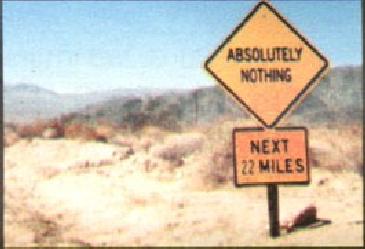
And I thought this was the road to the middle of nowhere
B
BrothaBill
Guest
cranny said:I think I'm more confused now than before I started this thread. Zen as well as Tao sound really interesting. But it's pretty deep at first glance. Ylifter gave me some good links to them so I guess I'll start there.
lol, sorry, we have some fun with Zen on psychonaut experiments awhile back and the clarity achieved. Unless you experience it, then words utterly fail to describe the experience. So, its Zen, we became part of it all.
Here, Ive posted this before. One thing is, Zen is enlightenment, the funniest thing, is that you will never get a straight answer of what Zen is out of anyone, That "IS" its essence. To come to the understanding yourself. Thats why the stories are so humorous to those who have pondered it for a long time. When you finally get "IT", you are enlightened.
The 101 Zen stories is for you to ponder.
What is Zen? (the simple question)
Zen is short for Zen Buddhism. It is sometimes called a religion and sometimes called a philosophy. Choose whichever term you prefer; it simply doesn't matter.
Historically, Zen Buddhism originates in the teachings of Siddhartha Gautama. Around 500 B.C. he was a prince in what is now India. At the age of 29, deeply troubled by the suffering he saw around him, he renounced his privileged life to seek understanding. After 6 years of struggling as an ascetic he finally achieved Enlightenment at age 35. After this he was known as the Buddha (meaning roughly "one who is awake". In a nutshell, he realized that everything is subject to change and that suffering and discontentment are the result of attachment to circumstances and things which, by their nature, are impermanent. By ridding oneself of these attachments, including attachment to the false notion of self or "I", one can be free of suffering.
The teachings of the Buddha have, to this day, been passed down from teacher to student. Around 475 A.D. one of these teachers, Bodhidharma, traveled from India to China and introduced the teachings of the Buddha there. In China Buddhism mingled with Taoism. The result of this mingling was the Ch'an School of Buddhism. Around 1200 A.D. Ch'an Buddhism spread from China to Japan where it is called (at least in translation) Zen Buddhism.
What is Zen? (the real question)
This question basically asks "What is the essence of Zen?" It appears in various guises throughout Zen literature, from "What is the meaning of Bodhidharma's coming from the West?" to "Have you eaten yet?". The question cuts right to the heart of the matter and can only be answered by you. Perhaps the best answer is "practice".
Why do people post such nonsense to this group?
One of the central points of Zen is intuitive understanding. As a result, words and sentences have no fixed meaning, and logic is often irrelevant. Words have meaning only in relation to who is using them, who they are talking to, and what situation they are used in. Some postings are indeed nonsense; other postings appear to be nonsense at first but this is because the meaning is all between the lines. Zen and poetry have gone hand in hand for centuries.
As far as reading anything Cranny, all words are variables, all teachings of men. The true answer to Zen is within you, always has been.
This is one of my favorite teaching stories:
The teacher hands the student a book. "This is my book," he explains to the student. "It's a painstaking transcription of the truth of all I have taught you. In it are guidelines on how to be truly independent, truly free."
The student accepts the book silently.
When the two returned to the school, the student chucks the book into the nearest fire.
"What the fuck are you doing?!" the teacher exclaims.
"What the fuck are you saying?!" the student replies.
Y_lifter
New member
Chapter 2 from Toa Te Ching, the supposed writing of Lau Tzu speaking
of the Main Essence of Taoism giving us Yin and Yang.
Light and Dark, Hard and Soft, Masculine and Feminine, Hot and Cold, Good and Evil
When yin and yang are in balance, all is in harmony.
Yet they are always changing and struggling against one another.
We must not struggle against the way of the Toa, but go with it
as a river does not struggle against the obstacle but flows around it.
When the world knows beauty as beauty, ugliness arises
When it knows good as good, evil arises
Thus being and non-being produce each other
Difficult and easy bring about each other
Long and short reveal each other
High and low support each other
Music and voice harmonize each other
Front and back follow each other
Therefore the sages:
Manage the work of detached actions
Conduct the teaching of no words
They work with myriad things but do not control
They create but do not possess
They act but do not presume
They succeed but do not dwell on success
It is because they do not dwell on success
That it never goes away
--------------------------------------------------------------------------------
Translation
"Hard" and "easy" are concepts relative to one another.
"Long" and "short" need each other to have meaning.
The universe is full of dualities.
Everything is relative; values have meaning only by comparison.
For instance, a task can only be “easy” if it is being compared to some other task that is relatively more difficult.
If there’s nothing else to compare against, the task cannot be rated in terms of difficulty.
Similarly, we can only say an object is “long” if we’re comparing it against another similar object that is shorter.
Each half of a duality cannot exist without the other half. A descriptive concept creates its own opposite.
.
.
of the Main Essence of Taoism giving us Yin and Yang.
Light and Dark, Hard and Soft, Masculine and Feminine, Hot and Cold, Good and Evil
When yin and yang are in balance, all is in harmony.
Yet they are always changing and struggling against one another.
We must not struggle against the way of the Toa, but go with it
as a river does not struggle against the obstacle but flows around it.
When the world knows beauty as beauty, ugliness arises
When it knows good as good, evil arises
Thus being and non-being produce each other
Difficult and easy bring about each other
Long and short reveal each other
High and low support each other
Music and voice harmonize each other
Front and back follow each other
Therefore the sages:
Manage the work of detached actions
Conduct the teaching of no words
They work with myriad things but do not control
They create but do not possess
They act but do not presume
They succeed but do not dwell on success
It is because they do not dwell on success
That it never goes away
--------------------------------------------------------------------------------
Translation
"Hard" and "easy" are concepts relative to one another.
"Long" and "short" need each other to have meaning.
The universe is full of dualities.
Everything is relative; values have meaning only by comparison.
For instance, a task can only be “easy” if it is being compared to some other task that is relatively more difficult.
If there’s nothing else to compare against, the task cannot be rated in terms of difficulty.
Similarly, we can only say an object is “long” if we’re comparing it against another similar object that is shorter.
Each half of a duality cannot exist without the other half. A descriptive concept creates its own opposite.
.
.
Y_lifter
New member
Taoist thoughts from the Tao Te Ching relating to Zens emptyness being the essence of what you should desire..
Thirty spokes join in one hub
In its emptiness, there is the function of a vehicle
Mix clay to create a container
In its emptiness, there is the function of a container
Cut open doors and windows to create a room
In its emptiness, there is the function of a room
Therefore, that which exists is used to create benefit
That which is empty is used to create functionality
--------------------------------------------------------------------------------
Interpretation
In a wheel, thirty spokes come together in one hub. The hole in the center of the hub - the place where it is empty - is what makes the wheel useful as part of a vehicle.
When we mix clay to create a container, we notice that it is the empty space in the center of the container that give it the usefulness of holding things.
When we cut open a wall to make space for windows and doors, we notice that it is these openings that make the room truly useful to us. If such openings did not exist, we would have no way of accessing the room!
Therefore, we can see how we create solid objects to provide us with benefits and convenience, but it is actually the emptiness formed by, or embedded in such objects that really provide them with functionality and usefulness.
Thirty spokes join in one hub
In its emptiness, there is the function of a vehicle
Mix clay to create a container
In its emptiness, there is the function of a container
Cut open doors and windows to create a room
In its emptiness, there is the function of a room
Therefore, that which exists is used to create benefit
That which is empty is used to create functionality
--------------------------------------------------------------------------------
Interpretation
In a wheel, thirty spokes come together in one hub. The hole in the center of the hub - the place where it is empty - is what makes the wheel useful as part of a vehicle.
When we mix clay to create a container, we notice that it is the empty space in the center of the container that give it the usefulness of holding things.
When we cut open a wall to make space for windows and doors, we notice that it is these openings that make the room truly useful to us. If such openings did not exist, we would have no way of accessing the room!
Therefore, we can see how we create solid objects to provide us with benefits and convenience, but it is actually the emptiness formed by, or embedded in such objects that really provide them with functionality and usefulness.
Last edited:

Y_lifter
New member
WODIN said:
^ word
B
BrothaBill
Guest
cranny said:Thanks bros. That makes more sense than anything yet. Guess I'll start my journey now.
You may want to pursue Tao philosophy then, not Zen. That was Zen this is Tao.
B
BrothaBill
Guest
Y_lifter said:Zen Philosophy, if there even is one, can be very difficult to apply to your life..
For me, the Simple Essence of Taoism and my Philosophy of life is..
Go with the Flow..
And for me, Zen is that and also 'question everything' and accept always unless it isnt Kosher
PBR
New member
that is an excellent post bro!!!....Y_lifter said:Taoist thoughts from the Tao Te Ching relating to Zens emptyness being the essence of what you should desire..
Thirty spokes join in one hub
In its emptiness, there is the function of a vehicle
Mix clay to create a container
In its emptiness, there is the function of a container
Cut open doors and windows to create a room
In its emptiness, there is the function of a room
Therefore, that which exists is used to create benefit
That which is empty is used to create functionality
--------------------------------------------------------------------------------
Interpretation
In a wheel, thirty spokes come together in one hub. The hole in the center of the hub - the place where it is empty - is what makes the wheel useful as part of a vehicle.
When we mix clay to create a container, we notice that it is the empty space in the center of the container that give it the usefulness of holding things.
When we cut open a wall to make space for windows and doors, we notice that it is these openings that make the room truly useful to us. If such openings did not exist, we would have no way of accessing the room!
Therefore, we can see how we create solid objects to provide us with benefits and convenience, but it is actually the emptiness formed by, or embedded in such objects that really provide them with functionality and usefulness.

Similar threads

- Replies
- 6
- Views
- 328


